


Achilles Tendinitis Treatment in Plano, Dallas, McKinney, Allen, Garland, Frisco & Coppell, TX
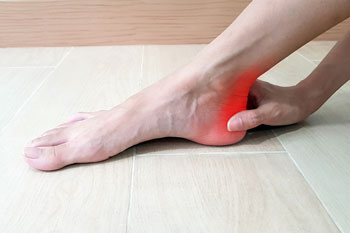
The Achilles tendon is a strong fibrous cord that connects the muscles in the back of your calf to your heel bone. It allows you to move your foot downwards and upwards. Pain in the Achilles tendon can be caused by overuse or tightness of the tendon and can lead to a painful thickening of the tendon known as Achilles tendinitis or tendinosis.
If you overstretch your Achilles tendon, or you were involved in an accident that ruptured or cut the Achilles tendon, damage may be complete or partial. Achilles tendon injuries mainly occur in people who are involved in sporting activities and athletes.
An Achilles tendon rupture usually occurs where the tendon is closest to the heel bone. Rupture or injury normally occurs here because there is limited blood flow in this part of the tendon.
Causes of Achilles Tendon Ruptures
Achilles tendon ruptures, tears or injuries are often caused by a sudden increase in the stress exerted on the Achilles tendon or injuries from accidents. It is more common in men than in women and in high-impact sports such as jumping, football, basketball and running. Falling or stepping into a deep hole can cause your Achilles’ tendon to rupture. If you are between the ages of 30 to 40, or older, you’re at higher risk of Achilles tendon rupture.
Injecting steroids into the ankle joint can weaken nearby tendons, leading to easy rupture of the Achilles tendon. Fluoroquinolone antibiotics can increase the risk of Achilles tendon rupture. Excess weight can put a lot of pressure on the Achilles’ tendon which can lead to rupture as well.
Symptoms of Achilles Tendinitis
If you are experiencing Achilles tendinitis/tendinosis, you may have the following symptoms:
- Pain and swelling close to your heel
- Inability to put weight on the affected leg
- Thickening of the tendon
- Tightness of the tendon
Partial or complete rupture can include the follow symptoms:
- Hearing a popping or snapping sound when the injury occurs
- Feeling a “gap” in the tendon in the back of the leg
Diagnosing of Achilles Tendonitis
During diagnosis, your doctor will conduct a physical exam to inspect your lower leg for tenderness and swelling. We’ll perform a series of physical tests to determine the extent of your injury. Your doctor may also order imaging scans such as MRI, X-ray, or ultrasound to examine the internal structure of your leg and evaluate the health of your Achilles’ tendon.
Achilles Tendinitis Treatments & Achilles Tendon Rupture
Treatment for Achilles tendon rupture often depends on your age, severity of the condition, and activity level. Younger people may require surgery to repair a completely ruptured Achilles tendon while older people may require nonsurgical management and treatment.
Achilles Tendon Injuries Treatment
Treatment for partial tears and minor ankle injuries includes home remedies such as:
Rest. You should always rest and avoid activities that cause pain, swelling or discomfort. Also, limit the amount of walking and weight-bearing on the injured ankle.
Ice. Apply an ice pack on the pain area for 15 to 20 minutes and repeat it every two to three hours while you’re awake. Do not apply ice packs directly to your skin. Wrap the ice pack in a towel before placing it. Talk with your doctor first before applying ice if you have vascular disease, diabetes or decreased sensation.
Compression. Compress the ankle with an elastic bandage until the swelling stops. Do not compress too tightly as this can hinder your circulation.
Elevation. Elevate your ankle above the level of your heart, especially at night to reduce swelling. Gravity helps reduce swelling by draining excess fluid.
Medications
In most cases, over-the-counter pain relievers such as ibuprofen (Advil, Motrin IB, others) or naproxen sodium (Aleve, others) or acetaminophen (Tylenol) are enough to relieve the pain. In addition to medications, you should limit movements and avoid high-impact activities
Physical Therapy
Stretching and muscle strengthening can help improve your condition, especially if you have
partial rupture of the Achilles tendon. If your tendon is completely ruptured, you most likely require a surgical procedure to get it corrected.
Surgery
The surgical procedure to fix a completely ruptured Achilles tendon generally involves stitching the torn tendon sections back together. The torn tendon may also be reinforced with other tendons if the condition is severe. Achilles tendinitis/tendinosis can be treated with surgery to remove the thickened fibrous tissue. After surgery, you may need to engage in physical therapy exercises to strengthen your Achilles’ tendon and leg muscles.
How long does it take for a strained Achilles tendon to heal?
It could take as little as two to three weeks or as long as six weeks to heal. You will likely return to complete normalcy within four to six months.
What is the best Achilles tendinitis treatment?
There are different ways to manage and treat Achilles tendinitis. The choice of treatment depends on the severity of the condition. You can treat mild conditions with home remedies, but severe conditions will likely require surgery.
Is walking good for Achilles tendinitis?
Walking short distances can help strengthen your calf muscles, increase flexibility, and reduce pain.
What happens if Achilles tendinitis goes untreated?
Left untreated, Achilles tendinitis usually gets worse. You will likely begin to feel chronic pain and the tendon may get ruptured. The condition could become very serious and lead to more serious injury.
How do you massage your Achilles tendon?
Gently rub the inflamed or ruptured tendon back and forth at the point where you feel increased tenderness. The directions of your massage should be perpendicular to the fibers of the tendon. Apply gentle pressure with your fingers and thumb when massaging.
When should I see a podiatrist for Achilles pain?
You should see us for treatment if you feel severe pain in the back of your leg between your calf and heel. You should see us if your ankle or leg becomes stiff or sore. Also, see us if your heel, ankle or leg gets inflamed.
Are you suffering with Achilles tendinitis? Schedule an appointment with Graff Foot Ankle and Wound Care. Call (972) 403-7733 today or use our convenient Request an Appointment form to schedule your visit.
